What Is Collagen and Why Do You Need It?

Collagen is the main protein that holds your body together, making up about one-third of all the protein in your body. You can think of collagen fibers as the sturdy support beams holding up a house. It lives in the deeper layer of your skin alongside elastin, which gives skin its stretch, and hyaluronic acid, which holds onto moisture. Together, these elements give young skin its firm, smooth, and plump look. Starting in your mid-to-late twenties, your body naturally begins to make about one percent less collagen every single year. Your daily habits and environment can speed up this loss even more. Sunlight produces harmful molecules that actively break down your skin's support fibers, while smoking and pollution put extra stress on skin cells. Eating a lot of sugary foods also causes a process where sugar attaches to collagen, making the fibers stiff and weak. As your collagen breaks down faster than your body can rebuild it, you start seeing fine lines, skin dryness, less firmness, and early sagging.
How Do Collagen Drinks and Powders Work?
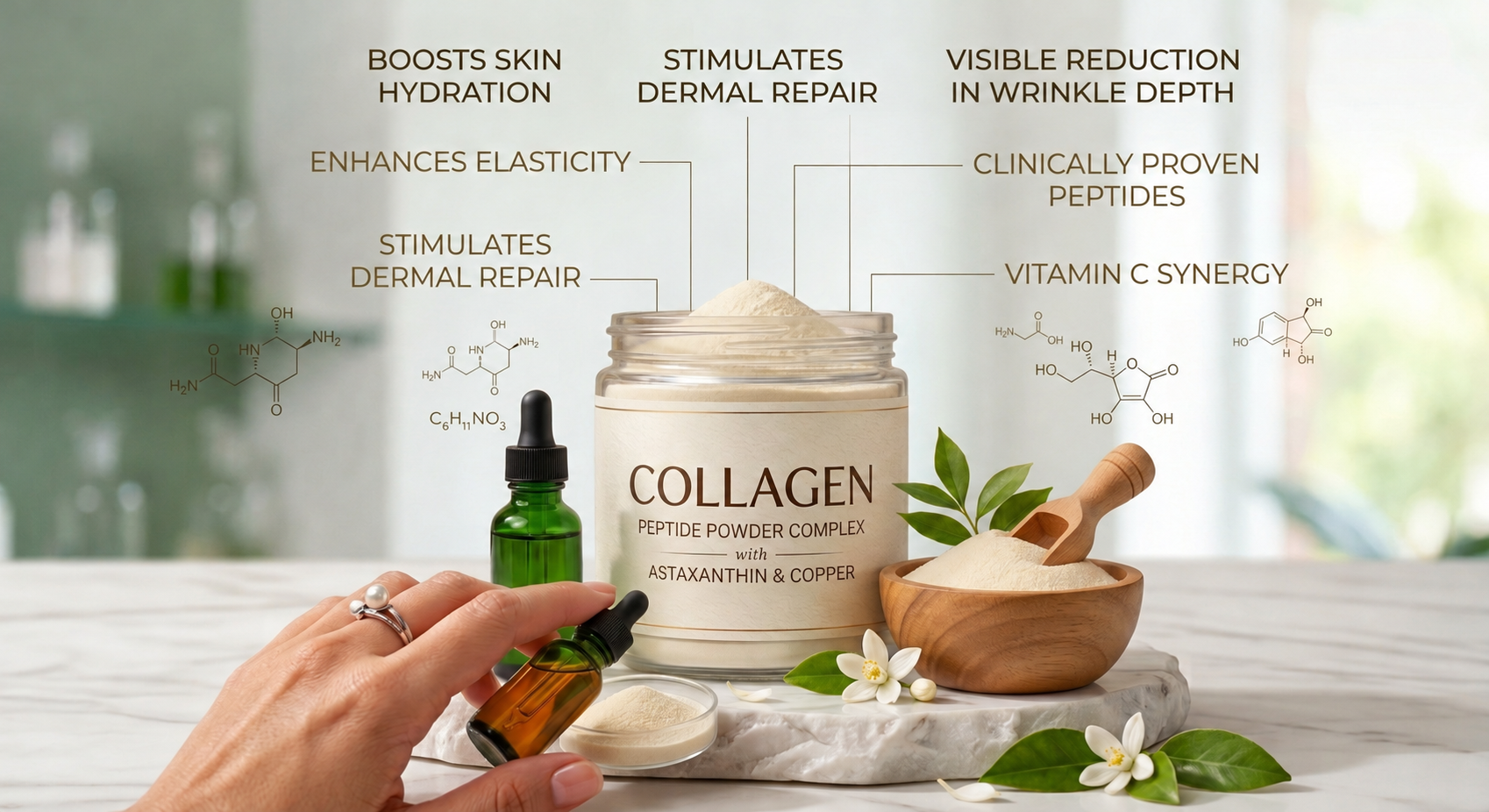
A common doubt people have is simple: since your stomach breaks down all protein into small pieces during digestion, how can a collagen drink specifically target your skin? Supplement makers solve this by using a special process to pre-break down the protein. Normal collagen molecules are far too large for your gut to absorb whole, so this process chops the long protein chains into tiny, easily absorbed pieces called collagen peptides. Because these collagen peptides are so small, your digestive system absorbs them quickly into your bloodstream, where they travel to the deeper layers of your skin. Even better, studies show that when your skin cells spot these collagen pieces floating in your blood, they get tricked into thinking your skin has been hurt. This signal prompts your cells to wake up and start producing fresh collagen, elastin, and moisture right inside your skin.
What Does Medical Research Say?
Skin research over the past ten years shows positive results for oral collagen peptides. Multiple clinical studies show that taking a small amount of collagen daily over two to three months clearly improves skin moisture and stretchiness compared to taking nothing at all. Doctors also measured a clear reduction in the depth of facial wrinkles, especially around the eyes, as the deep layer of the skin becomes thicker and firmer over time. Dermatologists point out that your results depend heavily on the quality of the product you pick. Look for hydrolyzed collagen peptides from fish or cattle, as these are the easiest for your body to absorb and use. It is also important to choose supplements that include Vitamin C, because your body absolutely needs Vitamin C to build and lock collagen into place.
Simple Ways to Protect Your Collagen Naturally

While supplements give your body helpful building blocks, they work best when paired with simple daily habits that protect the collagen you already have. Wearing a broad-spectrum sunscreen with SPF 30 or higher every single day is essential, as sun rays are the biggest cause of collagen breakdown. You can also boost your skin's firmness by using topical creams like retinol or tretinoin at night, which speed up cell renewal and tell your skin to make fresh collagen on the surface. Along with retinol, applying a daily Vitamin C serum stops damage from daily pollution before it can hurt your skin fibers. Lastly, eating a balanced diet with plenty of protein, Vitamin C, zinc, and copper makes sure your body always has the raw materials it needs to repair and renew itself naturally.
Conclusion
Oral collagen supplements will not change your skin overnight, but unlike many beauty trends, they are supported by real science. Taking good quality collagen peptides every day—along with wearing daily sunscreen, following a gentle skincare routine, and eating well—can genuinely help keep your skin hydrated, smooth, and firm from the inside out. If you are unsure which products or routines are best for your unique skin, talking to a certified dermatologist can help you build a simple, effective plan.